CATEGORY

Positioning
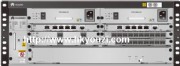
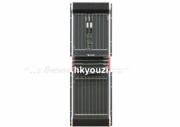
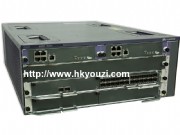
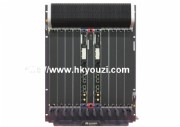
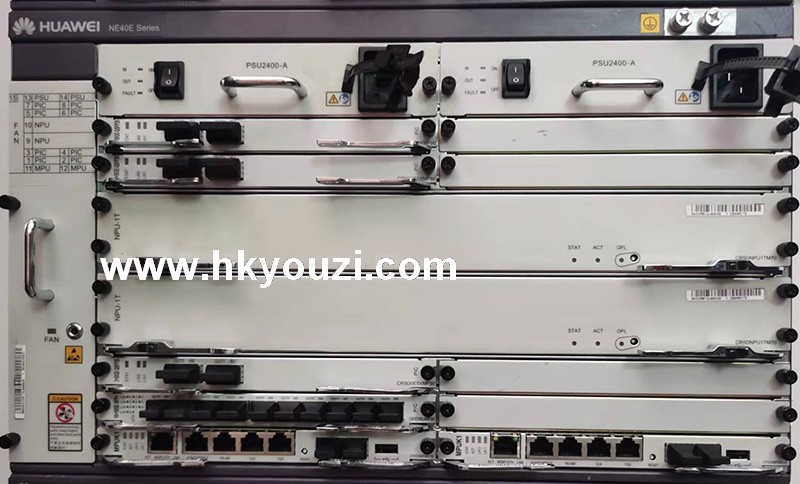
Huawei NE40E-X1-M4&NE40E-X2-M8/16(hereinafter referred to as the
NE40E-X1-M4&NE40E-X2-M8/16) are a high-end network product used to access, converge,
and transmit carrier-class Ethernet services on Fixed-Mobile Convergence (FMC)
Metropolitan Area Networks (MANs). The device can be used when the ambient temperature
is between -40掳C and +65掳C.
The NE40E-X1-M4&NE40E-X2-M8/16 run on the Versatile Routing Platform (VRP)
operating system developed by Huawei and adopts the hardware-based forwarding and
non-blocking data switching technology. The NE40E-X1-M4&NE40E-X2-M8/16 feature
carrier-class reliability, line-speed forwarding capability, perfect Quality of Service (QoS)
mechanism, service processing capability, and good extendability.
The NE40E-X1-M4&NE40E-X2-M8/16 provide strong capabilities in network access, Layer
2 switching, and transmission of Ethernet over Multi-Protocol Label Switching (EoMPLS)
services. The NE40E-X1-M4&NE40E-X2-M8/16 also support rich interface types and
provides broadband access, triple play, IP leased line, and Virtual Private Network (VPN)
services. The NE40E-X1-M4&NE40E-X2-M8/16 can also work in conjunction with the CX,
NE, and ME developed by Huawei to set up a hierarchical metro Ethernet that provides rich
services for customers.
Product Features
The NE40E has the following features:
锟?SingleMetro Platform
锟?The depth of chassis is 220 mm. The chassis is flexibly deployed and lows the power
consumption. The chassis also has a high adaptability to the ambient temperature.
锟?Flexible L2/L3 Hybrid Transport for Efficient Full-service Delivery.
锟?Carrier-class Reliability Design, End-to-End Versatile Platform.
锟?MultiPlay Network
锟?Various interfaces Support for Different Scenario (10 G/GE/FE/CPOS/E1).
锟?Taking MEN from Triple Play to MultiPlay.
锟?Support 1588v2 for MBB in FMC.
锟?Flexible VS Functions
As an important feature of the new-generation IP bearer devices, Virtual System (VS)
plays an active role in centralized operation and capital expenditure (CAPEX) and
operational expenditure (OPEX) reduction. By means of VS, operators divide large
Physical Routers (PRs) into multiple small separate VSs, optimizing physical resource
allocation.
锟?The following functions are supported by VS:
锟?Reduces CAPEX and OPEX.
锟?Flattens networks.
锟?Multi-service network
Different services are deployed on different VSs, forming a logical multi-service
network. This isolates different types of services to improve security and reliability.
锟?Verification of new services
New services, such as IPv6 and video services, can be verified on VSs, which isolate
services and have no impact on the existing network applications.
锟?Flexible Rollback Configuration
Rollback is an important means of configuration management, which is used in network
operation and maintenance and is significant for device maintenance on existing
networks. Configuring rollback can reduce the operator error ratio and improve device
maintenance efficiency.